The Legislative Branch: Making State Laws
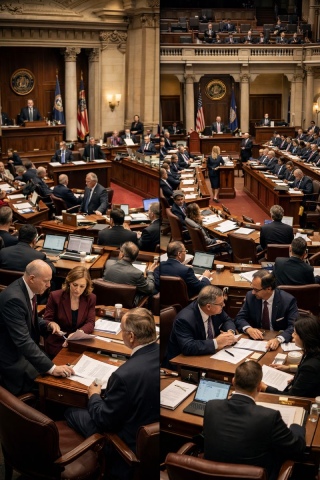
The state legislative branch is granted the task of enacting laws, allocating budgets, and overseeing the interworking operations of the administrative agencies. The majority of states have a bicameral legislature, consisting of a House of Representatives (or Assembly) and a Senate, although Nebraska is worth special mention because it has a unicameral legislature.
State legislatures pass legislation regarding a spectrum of issues for education, health care, transport, and environmental regulations. They also constitute the approval of budgets, local fund allocation, and monitoring government executive performance to make sure that the implementation of laws is reaching maximum efficiency.
State Legislators and Committees
State legislators are elected by constituents to represent districts within the state. Terms vary, typically two to four years, with responsibilities including drafting bills, serving on committees, and conducting hearings. Committees specialize in policy areas such as finance, education, or public safety, allowing legislators to develop expertise and provide detailed oversight.
Budgeting and Appropriations
One of the legislature’s key responsibilities is creating the state budget. This includes setting priorities for funding schools, healthcare programs, infrastructure projects, and other public services. Legislators work with the governor to finalize spending plans and ensure resources align with state priorities and legal requirements.
The Executive Branch: Implementing Policies
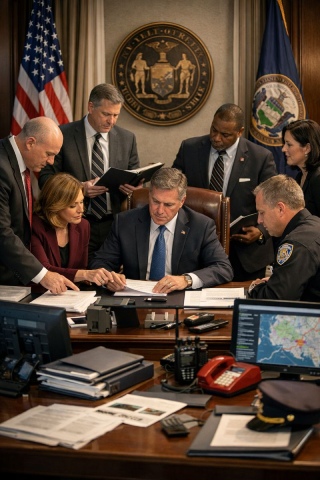
The executive branch enforces state laws and oversees day-to-day administration. Governors serve as the chief executive officers of their states, directing agencies, managing budgets, and coordinating emergency responses. Like the president at the federal level, governors have the power to sign or veto legislation, appoint officials, and guide policy agendas.
In addition to the governor, states often have elected officials such as lieutenant governors, attorneys general, secretaries of state, and treasurers. These offices help manage specific functions, from legal oversight and elections administration to fiscal management and public recordkeeping.
State Agencies and Departments
State executive agencies implement laws through regulations, services, and programs. For example, departments of transportation maintain roads and public transit, while departments of health oversee hospitals, disease control, and public health initiatives. These agencies translate legislative intent into practical services that affect daily life.
Emergency and Public Safety Roles
Governors and executive agencies coordinate responses to natural disasters, public health emergencies, and law enforcement challenges. State governments operate National Guard units, oversee state police or highway patrol, and coordinate disaster relief in partnership with federal agencies.
The Judicial Branch: Interpreting State Laws
Courts have a primary function of interpreting laws, resolving disputes, and negotiating the constitutionality of statutes with respect to a state's constitution. Judicial systems differ from place to place but generally include trial, appellate, and supreme courts. Courts deal with civil, criminal, and administrative cases arising under state law.
The judicial independence is pivotal to the balance between the legislature and the executive. Courts play a part in the review of legislation, hearing challenges to administrative action, and interpose disputes that arise between local and state authorities to ensure that the laws are uniformly implemented throughout the state.
State Supreme Courts and Appellate Systems
The state supreme court is the highest judicial authority within the state, typically hearing appeals on significant legal issues and constitutional questions. Intermediate appellate courts provide a secondary level of review, while trial courts handle cases at the local level, ensuring that the judicial process is accessible to citizens.
Local Court Interactions
State courts often work closely with municipal and county courts to manage cases, implement statewide legal standards, and coordinate enforcement of laws. This layered system allows for both regional autonomy and uniformity in interpreting state law.
State Governments in Daily Life
Acting as the focal point of interfacing between citizens and public governance, the state governments are mainly engaged in executing a diversified cluster of functions. Naturally, these unruffled administrative aspects of governance include mere routine-like functions such as legislation, budgeting, public security, and justice mechanism enjoyment. The state governments comparatively shadow the federal government instead of competing with it, and provision of services uniquely suited for the respective communities is on the rise once one arises through the preceding interpretation of structure and functions of the state governments.